
As an Amazon Associate I earn from qualifying purchases. This article contains affiliate links that may earn a commission at no extra cost to you.
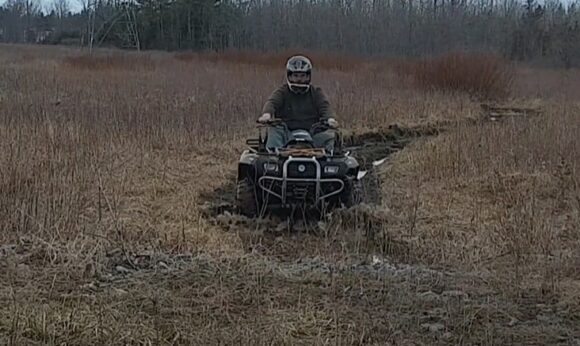
The Bombardier Traxter 500 is the machine BRP built to prove it could do utility ATVs, and it came out swinging in 1998. It ran a 498 cc single-cylinder four-stroke with a rear-mounted radiator, a push-button hydraulic gearbox plus a front differential that locks fully instead of just slipping, so it pulls through mud and snow in a way most quads from that era could not. That drivetrain is also where the complaints live.
Backfiring out of the box, plus shift quality and carbs that go finicky with age, all show up in the owner forums. This article covers the verified specs, what the top speed really is, plus the problems owners talk about. It ends with what to check before buying one used.
Traxter 500 Top Speed: What It Actually Does
No official top speed figure exists in the Bombardier materials I could verify, and that is normal for a utility quad of this vintage. The official spec pages published horsepower, torque, weight and fuel numbers, but never a speed claim, so treat any specific number you see quoted online as an estimate.
The honest way to describe it: the Traxter 500 is not a fast machine. Owners in the atvconnection threads put it plainly, saying it is not built for “speed of light in the woods” riding and that sportier quads will run away from it.
One owner who raced his against a Honda Foreman 400 and a Yamaha Grizzly said neither was in its class for work, while both would outrun it.
What you get instead is steady, usable pace. The 498 cc single makes its power low in the rev range, and the five-speed gearbox keeps it on the pipe. A realistic cruise on flat ground sits in the mid-40s (mph), with a bit more available on a long downhill with a tailwind, and 2WD versus 4WD barely changes the number. Load it up for work or add a plow, and the speed drops noticeably.
That is fine, because trail speed is not the job this quad was built for. If top speed is your buying criteria, look at a sport machine instead. If pulling, carrying and going anywhere in bad weather matter more, this one delivers.
Engine and Drivetrain Specs From the Official Page
The numbers below come from Bombardier’s own 1999 Traxter technical specification page, archived on the Wayback Machine. This is the model’s founding spec sheet and it matches what owners describe on the forums.
Engine: 498 cc, single cylinder, in-line, four-stroke, liquid-cooled with a rear-mounted fan-assisted radiator. The rear radiator is a genuine Bombardier quirk, it keeps hot coolant away from the rider and the front end, but it also means the cooling system lives low in the machine where mud and debris collect. Alternator output is a solid 400 W, and the battery is rated at 19 amp-hours.
Transmission: this is the part that surprises people. The Traxter does not run a CVT like most modern utility quads, including the ones from the same parent company today. It uses a five-speed gearbox shifted by a single rocker push-button with a hydraulic auto-clutch, so there is no clutch lever and no pedal. The sub-transmission offers High and Extra Low ranges along with Neutral, Reverse and Park. You can shift into reverse from any gear.
Final drive is shaft-based with a speed-sensing, full-locking front differential. Bombardier called it true all-wheel drive because both front wheels lock together under traction loss instead of one spinning free like a limited-slip design.
Dimensions and weight: 81.5 inches long, 47.0 inches wide, 45.0 inches tall, with 7.0 inches of front suspension travel, 7.5 inches at the rear, and 9.6 inches of ground clearance. Dry weight is 715 lb, which made it one of the heavier 500-class machines of its day. Fuel capacity is 5.2 U.S. gallons (20 liters). Braking is two hydraulic discs up front and a single hydraulic disc at the rear.
Underseat storage measures 1 cubic foot (30 liters), and the 1999 model carried a 6+6 limited warranty that added six months beyond the standard six-month coverage.
The Traxter Family: XL, XT, and the Bigger Max
Bombardier did not stop at one Traxter. The line grew into a small family through the early 2000s, and knowing the versions helps you read a used listing correctly. The base Traxter 500 is the model covered by the 1999 spec sheet, a no-frills utility quad with the step-through body and the hydraulic gearbox.
The XT added extras like front and rear racks, a winch-ready front end plus a few more creature comforts, which is why owners on the forums refer to their “XT” when listing toys. The XL was the touring-flavored version of the same 500 platform, and it shows up in the carburetor threads from the 2003 model year.
The Traxter Max took the same idea and scaled it up with a larger engine for heavier work, and the 650 Max models appear in the later forum threads alongside the 500s. If you are shopping today, you will mostly see the 500 variants, because that is what sold in volume. The 650 Max is rarer and usually pricier when it does surface.
All of them share the same core design language: step-through body, rear radiator, push-button gearbox plus the full-locking front differential that made the line famous.
Why the Full-Locking Front Diff Matters Off Road
The speed-sensing full-locking front differential is the Traxter’s party piece, and it deserves its own explanation. Most 1990s utility quads used a limited-slip or one-way front drive that let the outside wheel spin in a turn or under load. Bombardier’s system locks both front wheels together when it senses traction loss, which is what makes the machine effective in mud, snow or on hills.
Owners who pushed the machine hard, including the one who raced it against a Foreman 400 and a Grizzly, kept coming back to the AWD system as the reason the Traxter won the work comparison.
The flip side is that a locking front end changes the steering feel. In tight, dry turns the front wants to push straight and you will notice it until you learn to back off the throttle and let the front wheels run free. That is a small price for the traction. If you ride mostly dry trails and never work the machine, a locked front diff is wasted capability.
If you farm, plow, or ride wet terrain, it is the reason to pick a Traxter over a cheaper quad from the same era.
Backfiring and the Shift Complaints Everyone Mentions
Open any Traxter thread from the early 2000s and the same two words show up: backfire and shifting. In the atvconnection owner thread on the 500, one owner who had owned his XT for about ten months described a backfiring problem right out of the box, another said his issues were backfire and the shifting gear “like many other people as long as I know,” and a third dismissed the backfire as “not a problem.
” The pattern is consistent enough that it reads like a factory tuning quirk of the era rather than a failure.
The shift complaints need context. The hydraulic auto-clutch gearbox is a clever system, but it is a different feel from a CVT. Shifts happen on a delay as the hydraulics move, and if the linkage wears or the fluid level drops, the box gets notchy or refuses a gear.
One owner who bought a 2000 Traxter as a basket case found the machine stuck in first gear with the shift linkage bent internally; the previous owner had already replaced the flywheel and stator after the stator worked loose into the flywheel. Once he straightened the linkage, the box shifted again. If you own one of these, treat a shift problem as a linkage and fluid issue first, not a transmission rebuild.
Carburetor Trouble: Bad Fuel, Vent Tubes and Hard Starts
The Traxter 500 runs a Mikuni carburetor, and age plus ethanol fuel is the enemy.
A 2003 Traxter XL owner on atvconnection described the classic failure: the machine ran fine in the fall, then developed hard starting to the point it would only run with the choke while fuel was coming out the small vent tube on top of the carb.
He pulled the carb apart, found particles, likely from an old hose he had replaced years earlier; he cleaned everything out and got it running again.
The repair story matters because it is the whole Traxter carb experience in miniature. The machine is easy enough to work on, since the engine access is automotive-style under the seat, but the OEM Mikuni parts are pricey. One owner found the parts to go through the carb were close to replacement cost.
Before you tear anything down, check the basics: drain the bowl to look for water and varnish, verify the vent lines are clear and routed correctly, then confirm the fuel hose is ethanol-rated. Old rubber hose sheds particles into the carb, which is exactly what happened in that 2003 thread. If the quad has sat for months, fresh fuel and a carb clean fix most hard-start cases.
Stator, Charging and Electrical Quirks
Electrical gremlins show up regularly in Traxter owner discussions. The stator failure story from the 2000 model, where the stator came loose and got into the flywheel, is the dramatic end of the spectrum. More common are the quieter issues: batteries that go flat over winter storage and the machine’s healthy but not huge 400 W alternator trying to keep up with an aftermarket winch and lights.
The 19 amp-hour battery is small by modern standards, so parasitic draw from an accessory that stays hot kills it fast.
The fix routine is the same as any 20-plus-year-old quad. Keep the terminals clean and tight, use a quality maintainer when the machine sits, then check the charging output at the battery with a multimeter at a fast idle to confirm the stator and regulator are doing their work.
If a stator does fail on these it is often an engine-out job because the motor sits tight in the frame; owners on the forums are unanimous that removing the Traxter motor is a miserable task. Do the electrical checks before you pull anything apart.
Durability: What 400 Hours of Farm Work Looks Like
The Traxter’s reputation is built on durability, and the owner reports back it up. In the 2001 XT questions thread, one owner said his dad had run a Traxter 500 for everything from yard work to trail riding to snowplowing. He racked up around 400 hours with no major component failures, and he maintained it himself because the machine is easy to work on. Another called the Traxter the ultimate work ATV.
A third said nothing in its class comes close for working ability, after pitting it against a Honda Foreman 400 and a Yamaha Grizzly.
That is not to say they are bulletproof. The same threads carry reports of cams, piston rings and stators needing replacement. The machine is also heavy at 715 lb dry, so it is a handful in deep mud and not a trail weapon. Buy one for what it is: a farm quad with a clever drivetrain and a cult following.
If you are comparing it to modern utility machines, the Can-Am Outlander 450 has its own set of recurring issues you can read about, while the CFMOTO Uforce 1000 shows how far utility quads have come since the 1990s.
atv battery maintainer
Owners of this machine rave about it. See today’s price on Amazon.
What to Check Before Buying a Used Traxter 500
If a Traxter 500 shows up in your area, and they still do, sellers usually price them as old quads, which means there is real value there if the machine checks out. Go through the basics first. Cold start it from a stone-cold engine, because hard starting is the number one carb symptom, then warm it up and cycle the push-button shifter through all five gears in High and Extra Low, feeling for refusal or delay.
Reverse from any gear is a Traxter party trick, so test it. Check the vent tubes on the carb for cracks and the fuel hose for age, since particles from old rubber are the classic carb killer.
Then look at the electrical system. Confirm the battery holds a charge and the charging output is in range, and ask when the stator was last done. A stator replacement is an engine-out job on these, and that labor cost swamps the purchase price. Look underneath for bent shift linkage and signs the case has been opened.
Finally, accept what you are buying: this is a 25-year-old utility quad with a five-speed hydraulic gearbox and a full-locking front differential, and parts availability comes mostly from eBay and dealers that still stock NOS.
If you want something easier to live with day to day, the Yamaha Grizzly 700 has a well-documented record of its own issues, but it is a much newer machine.
Maintenance That Keeps a Traxter Alive
Owners who keep these machines for years follow a simple rhythm. Oil and filter changes on schedule matter on this engine like any other, and the rear-mounted radiator needs the fins cleaned of mud after every serious ride, because coolant heat rejection drops fast when the core is plugged. Check the coolant level with the machine cold and top up with the right coolant mix. Keep the battery on a maintainer over winter.
That is the single best thing you can do for a machine that only runs seasonally, and it costs almost nothing.
For the gearbox, the hydraulic auto-clutch system deserves the same respect as a manual transmission. Check the fluid level and condition yearly, and if shifts get lazy, bleed or refresh the system before blaming the transmission. Stabilize the fuel or run it dry before storage, because ethanol fuel is what turns a good-running Traxter into a hard-starting one.
A battery maintainer like the ones on Amazon makes the winter routine painless. None of this is exotic, it is the standard maintenance any 1990s quad needs, done on a schedule.
One more habit pays off on these machines specifically. Because the radiator sits behind the rear wheels, the fan shroud and core collect trail debris that a front-mounted radiator would never see. A quick rinse with a garden hose after muddy rides keeps the fan from cycling constantly and stops the machine from running hot on slow trail work. The same goes for the brake discs, which sit low and pick up mud.
A few minutes of cleaning after a wet ride beats a weekend of brake work later.
Bottom line: the Bombardier Traxter 500 is a 498 cc single-cylinder workhorse with a five-speed hydraulic auto-clutch gearbox, full-locking AWD and a rear-mounted radiator. It tops out around the mid-40s rather than anything dramatic. It is not fast and it is heavy, but owners who use them for real work report hundreds of hours without major failures.
The common issues, backfiring, shift linkage, carburetor age plus stator wear, are all well documented with known fixes. Check the shift action and charging system before you buy. Keep the fuel fresh and the battery maintained, and a Traxter will still do a day of farm work that embarrasses modern machines. For the price of an old quad, that is a lot of machine.

